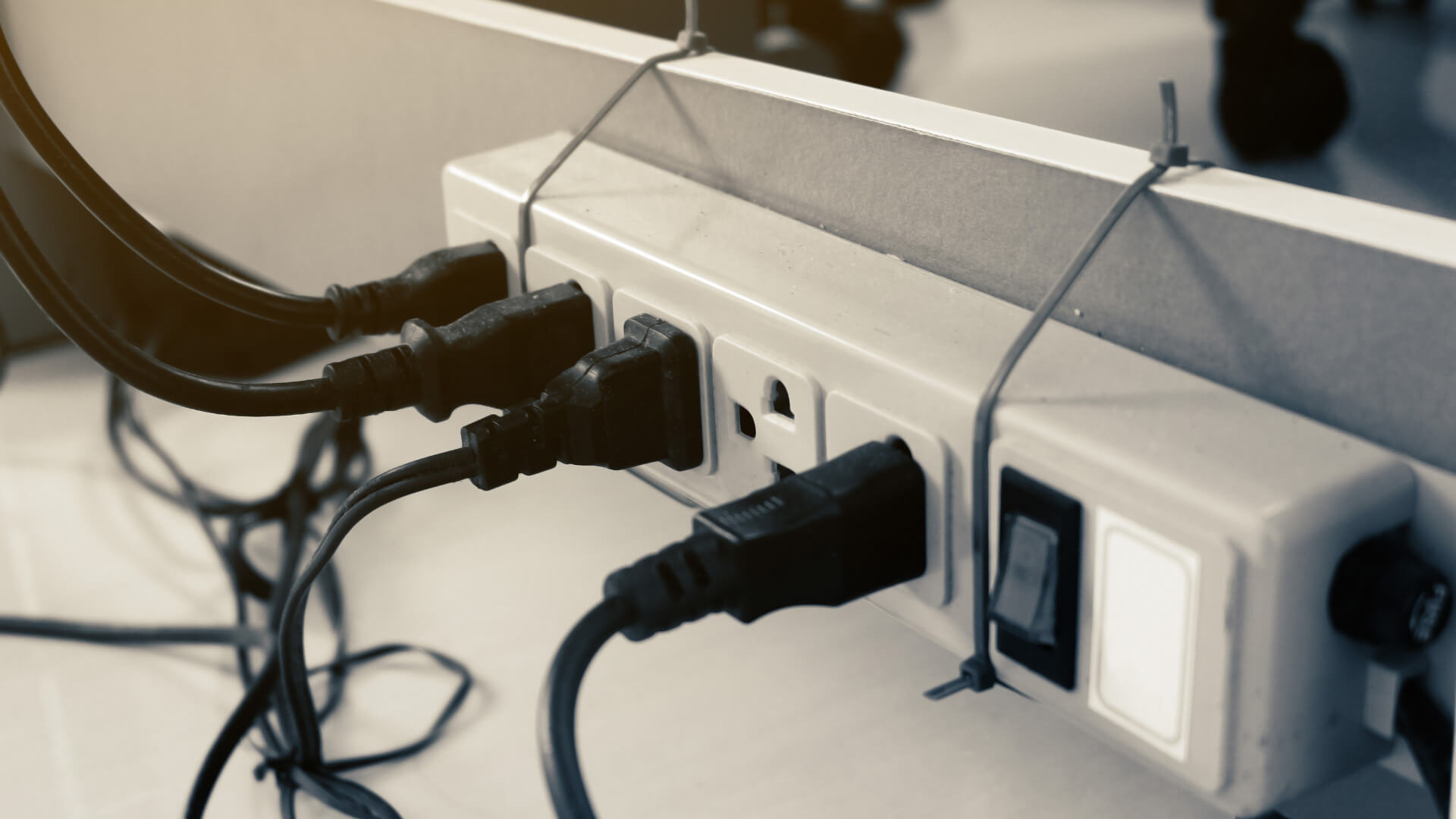
It’s a Tuesday late afternoon. The AC kicks on, the dishwasher’s running, and somewhere down the street a transformer hiccups. You don’t hear it, you don’t see it, but for a split second, more electricity than your outlets were built to handle rushes through your home’s wiring. Then everything goes back to normal, except the flat-screen in the living room won’t turn back on.
That’s a power surge. And in Northeast Florida, where summer storms roll in almost on schedule, they happen far more often than most homeowners realize.
What Actually Causes a Power Surge?
When most people hear “power surge,” they immediately think of lightning, and while a lightning strike can send a massive burst of electricity through a home in an instant, it is only one of several possible causes.
Most power surges are much smaller and happen without you noticing. They can be triggered by changes in the utility grid, repairs to a nearby power line, or even large appliances in your own home, such as your air conditioner, refrigerator, washer, or dryer, turning on and off.
You probably won’t notice a thing when these smaller surges happen, since there’s no flicker or sound to give them away. They’re just quietly going off in the background, sometimes multiple times a day, and while one surge on its own might not do any real damage, it’s the repeat exposure that adds up, slowly wearing down the appliances and electronics plugged into your system over time.
It helps to think of surge damage less as one major event and more as gradual wear and tear, with each small surge taking a little more life out of the devices you rely on every day.
The Everyday Damage You May Not Notice
Power surges do not always cause immediate or obvious damage. Smaller surges can gradually wear down the appliances and electronics you rely on every day.
Over time, they may damage appliance control boards, cause computers and TVs to glitch, weaken device batteries, reduce HVAC efficiency, and shorten the lifespan of smart home devices that stay connected around the clock.
Signs Your Home Has Already Taken Surge Damage
Surge damage is not always obvious. Instead of a loud pop or a burning smell, it often shows up as a series of small, frustrating issues that are easy to blame on aging appliances or simple bad luck. Here are a few warning signs worth watching for:
- An appliance or electronic device that stops working for no clear reason, especially shortly after a storm
- An HVAC system that seems to be running less efficiently or short-cycling more than usual
- Smart devices that randomly disconnect, reset, or lose their settings
- Multiple unrelated devices failing within a short window of each other
Any one of these on its own might be normal wear. But if you notice a cluster of them, especially after a storm season, it’s worth having your electrical system checked before another surge does more damage.
Why Whole-Home Surge Protection Makes Sense
A surge-protecting power strip can help protect whatever is plugged into it, but it only covers one small part of your home. It does not protect your HVAC system, water heater, major appliances, or the rest of your electrical system.
Whole-home surge protection is installed at your electrical panel, where it helps control excess voltage before it can travel through your home. Rather than protecting just one plugged-in device, it helps safeguard everything connected to your electrical system.
For a family, that means protecting the things you rely on every day, including:
- The HVAC system that makes Florida summers more comfortable
- The refrigerator, washer, and dryer that keep the household running
- Home office equipment, gaming consoles, and TVs
- Smart thermostats, doorbell cameras, and home security systems
Rather than treating every appliance and device as a separate risk, whole-home surge protection helps protect your home as one connected system.
What Installation Actually Looks Like
Many homeowners put off whole-home surge protection because they assume installation will be complicated or disruptive. In reality, it is usually a straightforward job. A licensed electrician installs the device at your electrical panel, and the work can often be completed within a few hours.
There is no need to rewire the house, replace your outlets, or make major changes to your electrical system. Once installed, the device works quietly in the background, helping protect your home without requiring any extra effort from you.
A Layer of Protection Worth Having
Maybe you just had a panel upgrade done, or you’ve noticed flickering lights one too many times and started wondering if it’s actually a problem. Either way, surge protection is a good next move. It’s not a replacement for a healthy panel, just a backup for it. And if you’ve already got a backup generator set up for hurricane season, there’s still a gap it doesn’t cover: the small surges that happen while the power’s on and everything looks normal.
Adding surge protection doesn’t mean ripping into your home’s wiring or turning this into a bigger job than it needs to be. It’s one upgrade, and honestly, it only has to work once. The first time it keeps your AC unit or your refrigerator from getting fried, you’ve already gotten your money’s worth.
Frequently Asked Questions
-
Will whole-home surge protection stop damage from a direct lightning strike?
It considerably reduces the risk, but a direct strike is an extreme event that no surge protector can fully guarantee against. Where whole-home protection really earns its keep is against the far more common smaller surges, grid switching, storm-related spikes, and everyday internal surges that cause the bulk of long-term damage.
-
I already use surge-protector power strips. Do I still need this?
Power strips only protect what’s plugged into them, and only up to a limited capacity. Whole-home protection covers hardwired systems like your HVAC and water heater, which strips can’t touch, and it stops surges at the source instead of at each outlet.
-
How do I know if this is worth it for my home?
It depends on your panel, your appliances, and how your household uses power. The most reliable way to find out is to have a licensed electrician assess your particular setup.
Let’s Talk About Your Home’s Protection
Every home’s electrical system is a little different, and the right surge protection setup depends on your panel, your appliances, and how your household uses power. Our residential services team can walk through your home’s specific setup and tell you honestly whether whole-home surge protection is worth the investment for your situation.
Contact Schuman Electric today to learn if whole-home surge protection is right for your home.